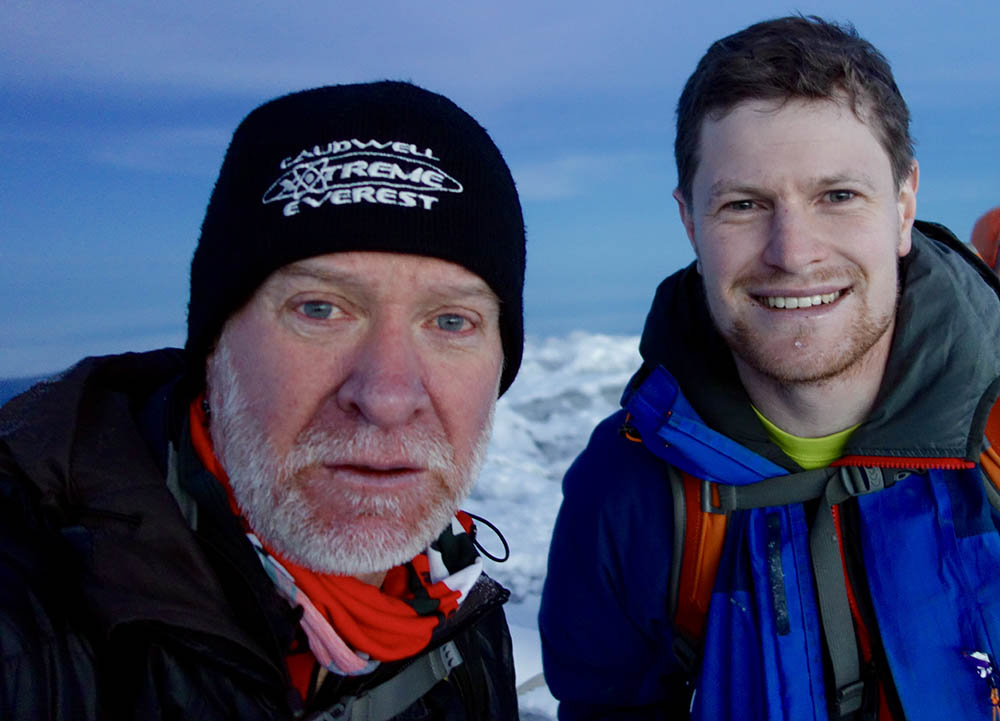
We are proud to announce Professor Chris Imray as our new Adventure Medic Patron. Chris is a Consultant Vascular and Transplant Surgeon at UHCW NHS Trust, and an academic at both Coventry University and Warwick Medical School, as well as being a renowned figure in the mountain medicine community. He has traveled the world as a climber and researcher, summiting both Cho Oyu and Everest and publishing over 130 peer reviewed papers. Chris is a member of both the Alpine and the Climbers’ Club and sits on the Mount Everest Screening Committee. He is an acknowledged expert in cold injuries and runs the UK Frostbite Advice Service for the British Mountaineering Council.
Chris has been hugely supportive of Adventure Medic since we began, writing articles for us and spreading the word. In this interview, we talk medicine and climbing, from Cho Oyu to Pabbay.

Do what you enjoy – it’s fun and is probably what you will do best. Never regret taking time out to do something interesting or worthwhile.
Chris Imray
Chris, you do an incredible number of things. How do you fit them all in?
To be honest, I don’t quite know. A key feature is sticking to things I enjoy and as a result they don’t seem so much like work. A combination of supportive hospital management and work colleagues has been crucial, particularly when it comes to trying to swap on-calls etc. Most important of all, I have been really lucky to have a super-supportive wife who has never questioned any of my decisions. Until the last few weeks when she drew the line at paragliding… for the moment!
You are involved in research at all levels – what excites you about studying extreme environments?
Studying extreme environments means travelling to remote and exciting places with like minded people, and I guess I just love being in the mountains.
Also, one of the best ways to justify time away from work is to come back with publishable data. As a Director of Research and Development, I am forever being told by experienced doctors how difficult it is to do research. However, with a little guidance, our 16 year-old babysitter went on a school trip to Peru and came back with data she was able to get published prior to successfully applying to medical school! I use this as an example of how anyone can do research if they set about carefully asking the correct question.
2015 was a particularly good year though, with an article in one of the climbing journals as well as a number of articles in the medical press. We also had a review in the Lancet on what wilderness medicine can teach hospital medicine.
Who do you look up to in medicine?
I think anyone who approaches their job with an enthusiasm and energy to make a difference deserves acknowledgement. It’s a tough job at times and its important not to lose sight of the fun and satisfaction that it can bring.
In wilderness medicine, one of my heroes is Emmanuel Cauchy. He is based in Chamonix and has come up with two really important advances in the treatment of frostbite. The first being the development of a predictive classification for frostbite, so that on the second day after exposure it is possible to predict with a fair degree of accuracy what the subsequent outcome is likely to be. The second major advance he made was a NEJM paper showing that thrombolysis or iloprost within 24 hours of exposure reduces the number of digits that end up being amputated after a severe frostbite injury.
Wilderness medicine is becoming more professionalised: is that a good thing?
That’s a tricky question. A bit like the Curate’s egg, it has both good and bad points. Clearly delivering safe high quality care in remote and austere environments has to be our primary aim and so professionalisation moves us towards that goal. However losing site of this aim, through burgeoning bureaucracy in particular, would be detrimental. The changes are however inevitable and really need to be embraced by those who are active in the field so the bureaucracy doesn’t strangle our vibrant and energetic specialty.
You are known to be passionate about climbing – what have been your favourite trips?
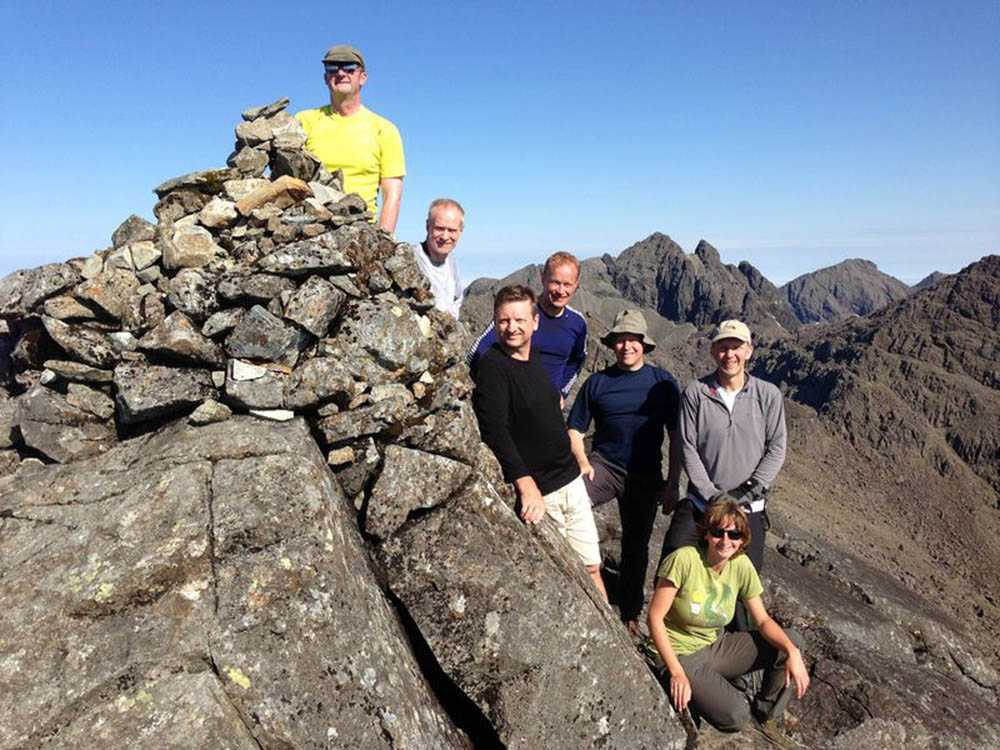
I started climbing at school. I can still remember the excitement and even the smell of the heather of my first climb on the Milestone Buttress on Tryfan. We also used to head up to Skye for a fortnight’s camping at Glen Brittle each spring. Last year, approximately 35 years later, a few of us went up again to do the Skye Ridge and it was wonderful to be joined at the campsite by Brian, one of the schoolmasters who introduced us to mountaineering all those years ago.
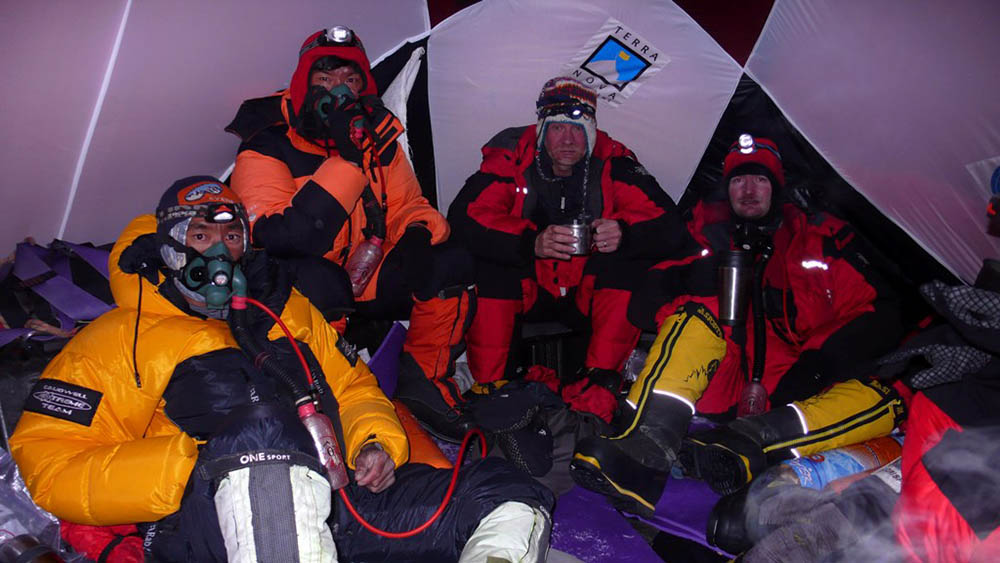
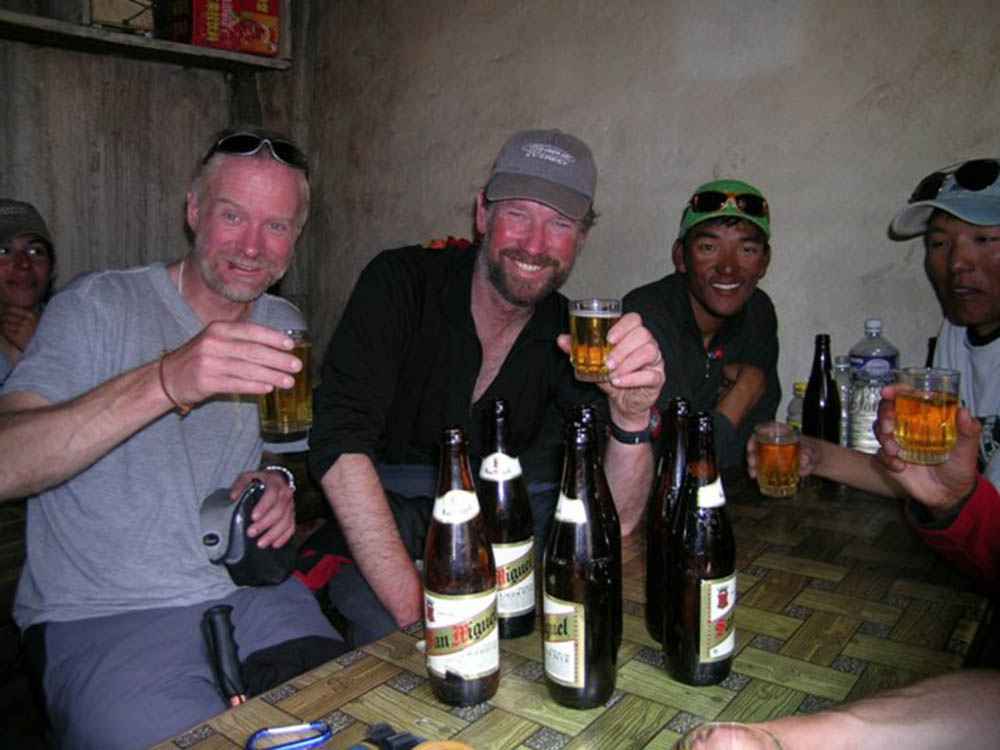
I have been so lucky with great trips all over the world. Joining the Birmingham Medical Research Expeditionary Society transformed the way I viewed expeditions to the Greater Ranges. Each trip had research as well as a mountaineering objectives. While travelling to some great places in wonderful company, I gradually began to amass a significant expertise in mountain medicine. Then in 2003, Mike Grocott suggested a research trip to Everest which came to spectacular fruition in 2007.
Otherwise, our trip to Denali was really special, camping on the ice in challenging conditions for three and a half weeks. West Papua combined jungle, fascinating indigenous people and mountains for the first time.
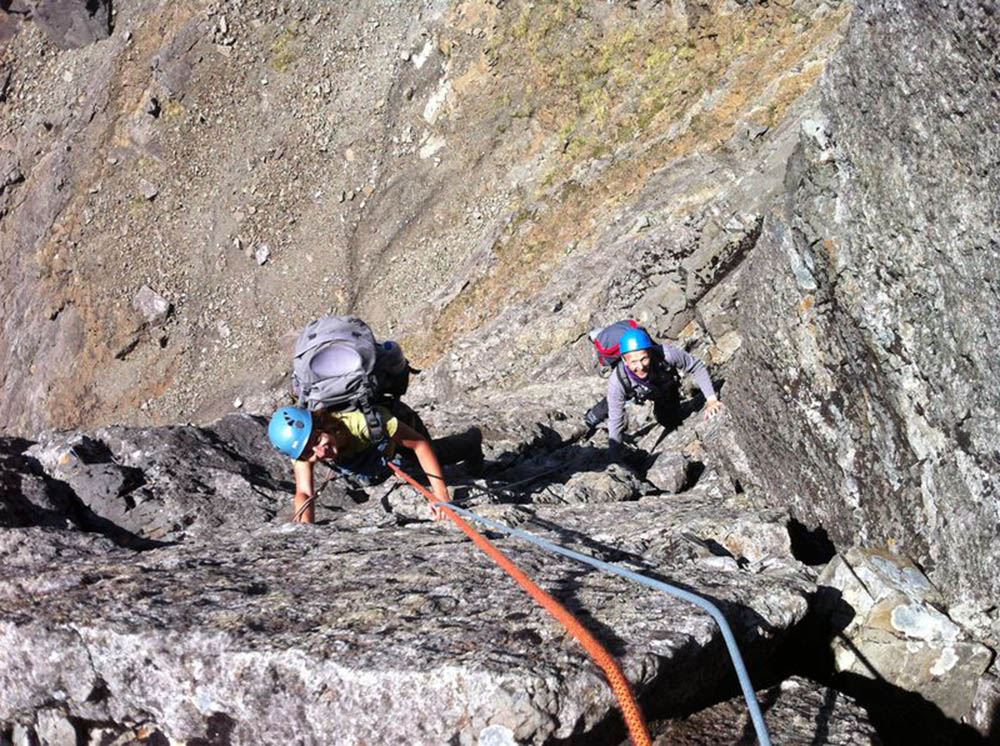
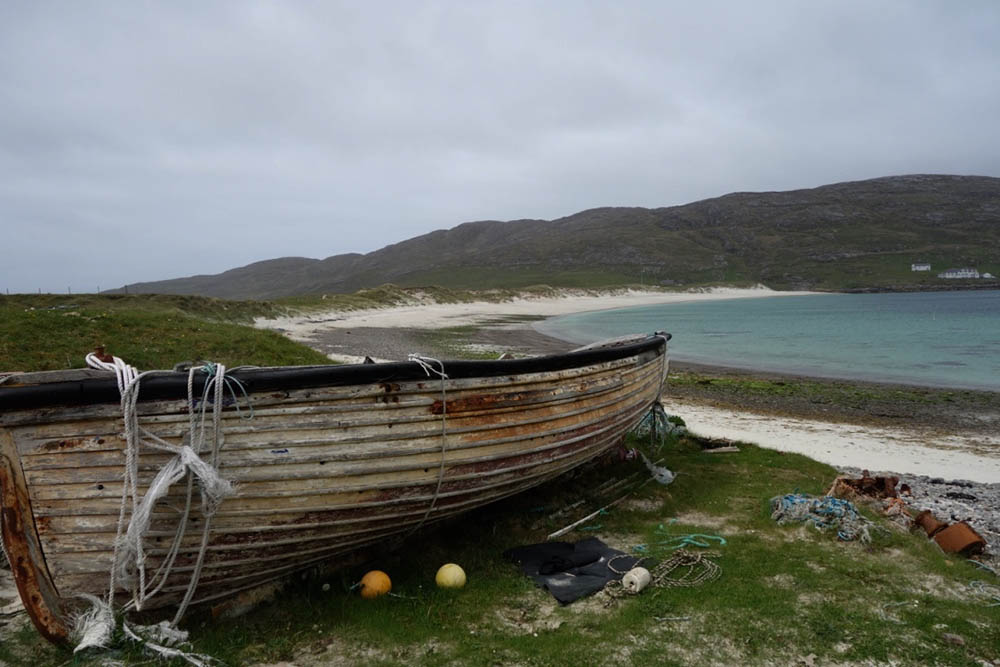
More recently, I have had a couple of trips to Pabbay and Mingulay in the Outer Hebrides. Wild camping (in good weather!) and trad climbing in the UK in great company is about as simple and good as it gets.
Have you had any scary moments on expedition?
Some people seem to be forever having scrapes and near-misses. Whilst exciting to read about, I have to say I don’t like being scared so I do my best to avoid them.
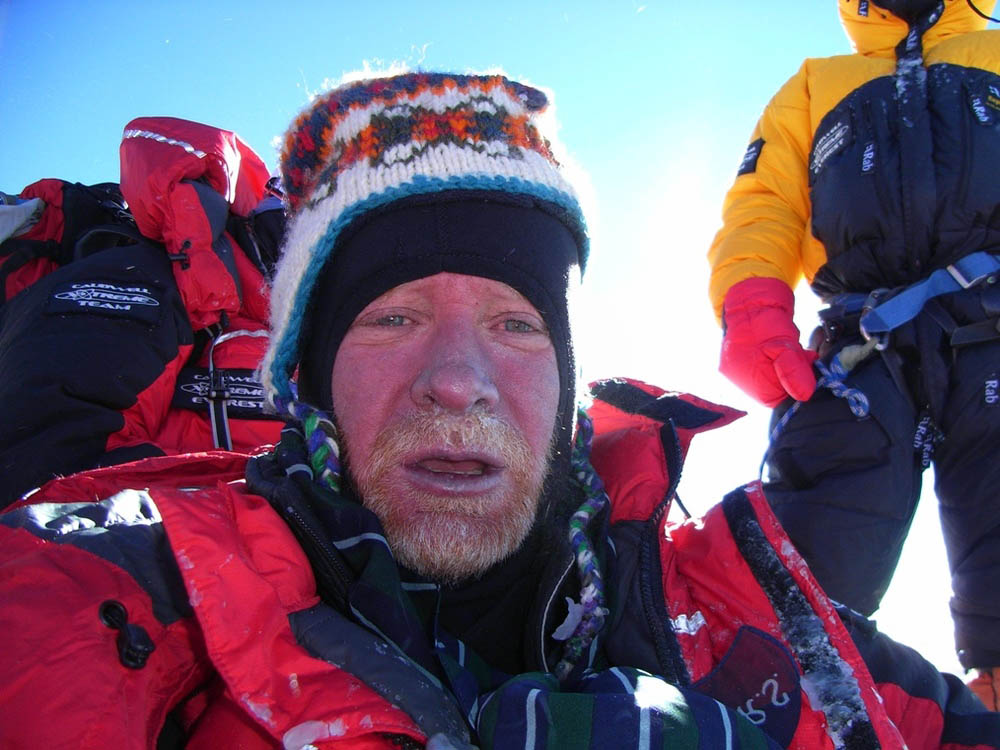
Evacuating a 49 year-old from Tibet after he had sustained a severe stroke at 5900m was challenging and difficult both physically and mentally. I helped evacuate him back to Zhangmu (2371m) and his guide then took him over the border into Nepal and to Kathmandu. I was left wondering whether it was worth rejoining the expedition, the huge temptation being to head back home. However I decided to try to rejoin the team and over the next few days, caught up the others and summited Cho Oyu ascending from 2371m to 8201m in 5 days.
Tell us about Pabbay

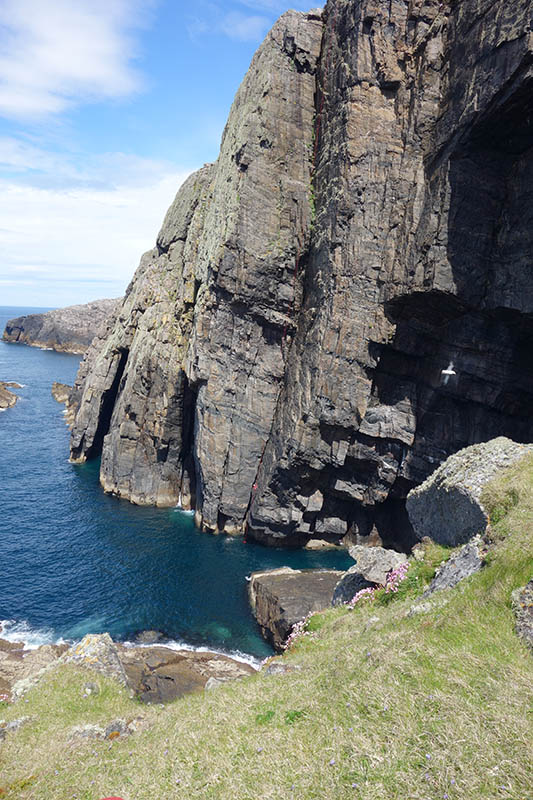
Pabbay is a remote and uninhabited island in the Outer Hebrides that is reached by a five hour ferry from Oban to Barra and a further one and a half hours in a fishing boat heading south. There is no phone reception, it’s about as remote as you can get in the UK. The extreme remoteness is matched by its natural beauty.
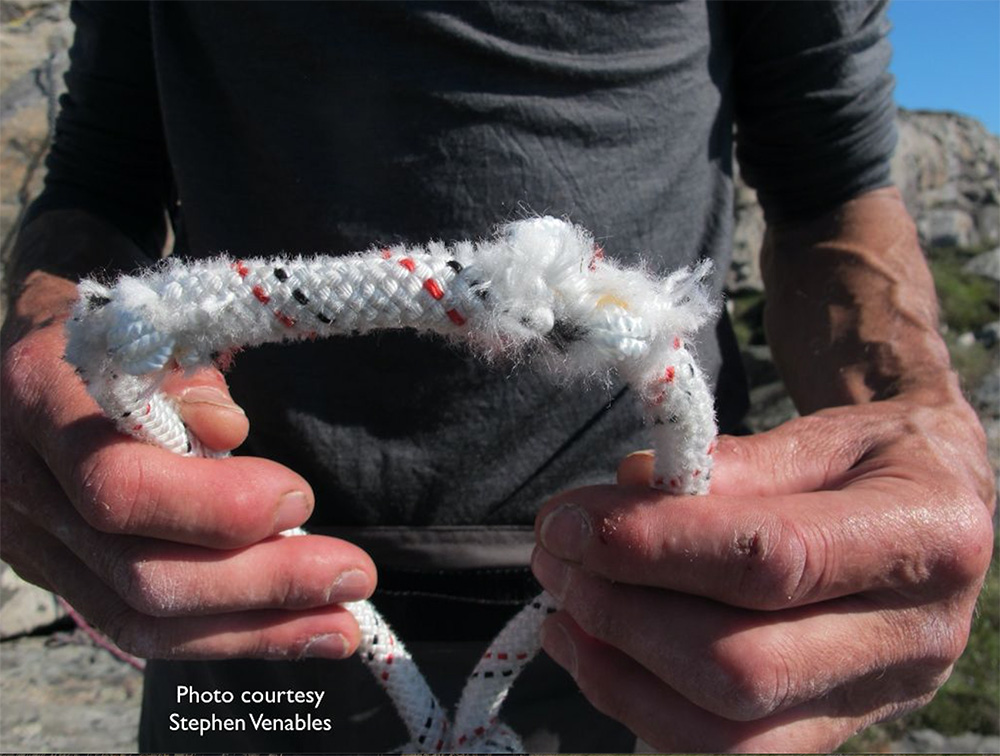
The attraction to climbers are the stunning 100m gneiss sea cliffs, and many of these are accessed by free hanging abseils. Whilst approaching Prophecy of Drowning, we spent some protecting the abseil rope from wear. A couple of days later another group set up an abseil at the same point and were a little less concerned about rope wear. One climber had a very scary moment when the abseil rope sheath wore through with a 80m free drop below. The individual sorted the situation with a complex series of moves using prussiks but it illustrates how close we all are to a poor outcome and the importance of need for continuous vigilance and attention to detail in the mountains.
Is there an item of kit that you never do without?
Gosh – that’s a tricky question. I guess it’s more a personality trait than an item of kit. A sense of humour combined with a flexible, problem-solving attitude would be the most important attributes.
Where is your next trip going to be?
There is talk of trad climbing in Lewis with Kyle Pattinson this year and that really appeals. I am heading off to Barra with my wife for a fortnight in August and we hope to get some sailing/kayaking and walking done.
I climbed Aconcagua in 1990 and have I have now climbed five of the Seven Summits. Whilst in general I don’t like tick lists, if the right opportunity arose it would be great to complete the seven by climbing Elbrus and Vinson.
Finally, any thoughts or words of encouragement for Adventure Medic readers?
Do what you enjoy – it’s fun and is probably what you will do best. Never regret taking time out to do something interesting or worthwhile.
I took a year off as a third year medical student to live and work in Nepal and it transformed the way I saw the world. I understood there was no need to slavishly follow a prescribed career path. It also gave me the opportunity to fall in love with a place and a people that have subsequently impacted on the rest of my life.
Thanks Chris! You can read all of Professor Chris Imray’s Adventure Medic articles here.