One of the most enjoyable aspects of adventure medicine is keeping up with new developments in sport or exploration and figuring out how to best support our clients in pushing their boundaries. In this article, Matt Wilkes and Jake Holland review the adventure medicine considerations for paralpinism, considering each phase of the activity in turn.
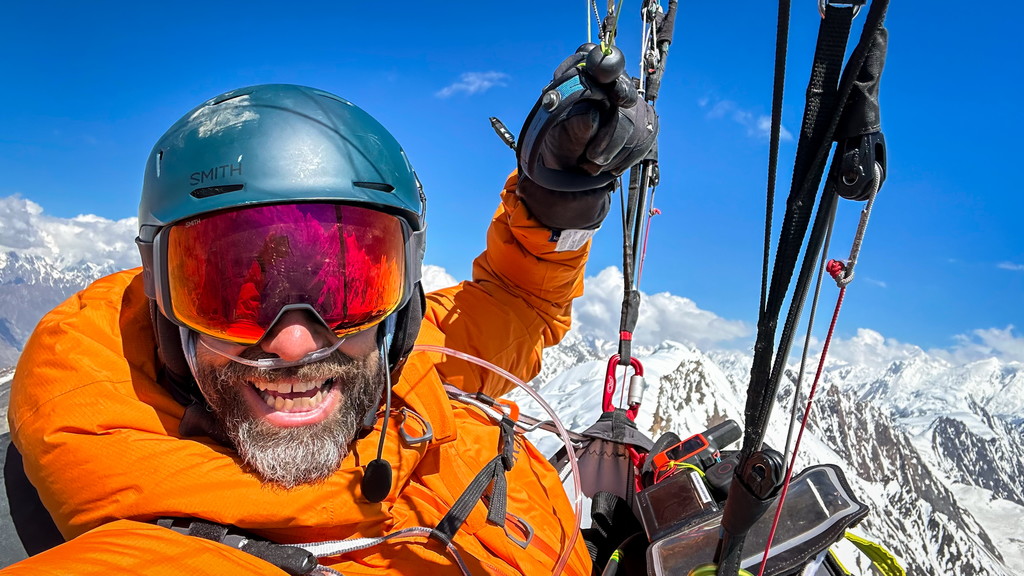
Matt is one of the founders of Adventure Medic, and a visiting senior lecturer at the Extreme Environments Laboratory in Portsmouth. He loves flying paragliders in the high mountains, especially the Alps and the Himalayas. Jake Holland is a filmmaker and multisport athlete based in Chamonix, France. Jake is one of the athletes pushing paralpinism in the Alps, and all over the world. Check out his Instagram, and his latest film, The Magic of Freedom.
Paragliding is born
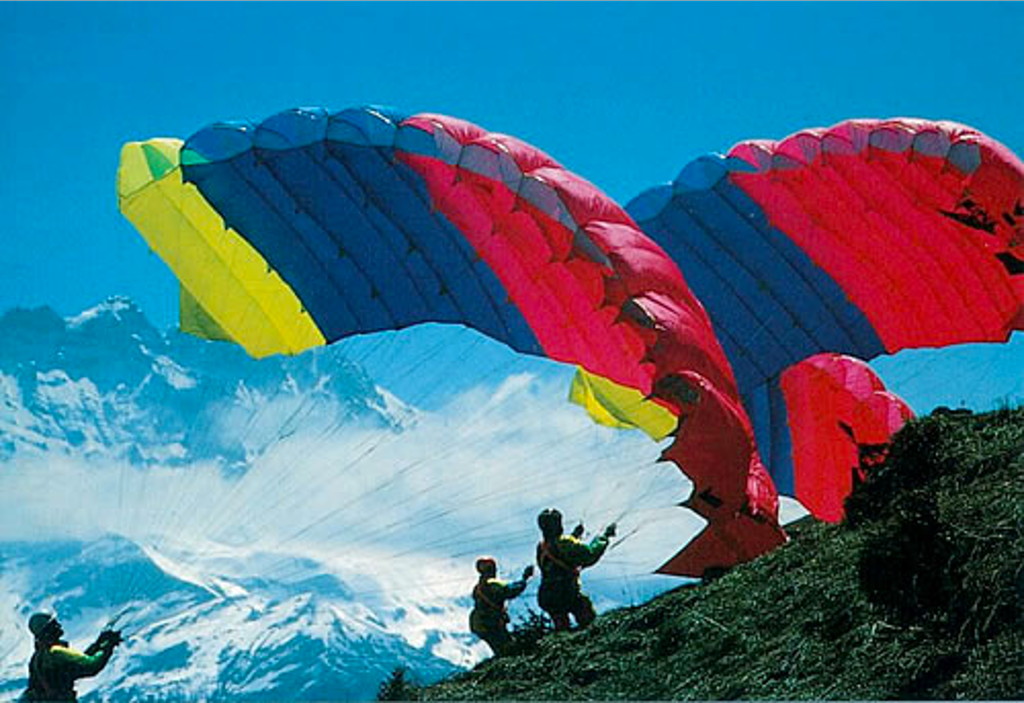
In June 1978, skydiver Jean-Claude Bétemps stood with his friend André Bohn on Mont Pertuiset, overlooking Mieussy in France. He took the risers of his parachute in his hands and ran headlong down the slope. The canopy filled with air, and Bétemps lifted off, flying to the valley floor. Bohn soon joined him, and paragliding was born.
Since that day, paragliding has evolved to become the dominant form of free flight. Free flight is flying without an engine, and includes sailplane gliding, hang gliding and wingsuit flying. The introduction of new materials, such as lightweight and durable fabrics and lines, as well as improved aerodynamic understanding, has revolutionised glider construction. The paragliding cross-country distance record is now 612 km in a single unpowered flight, and the (voluntary) altitude record is 8,407 m without oxygen.
Paragliding meets alpinism
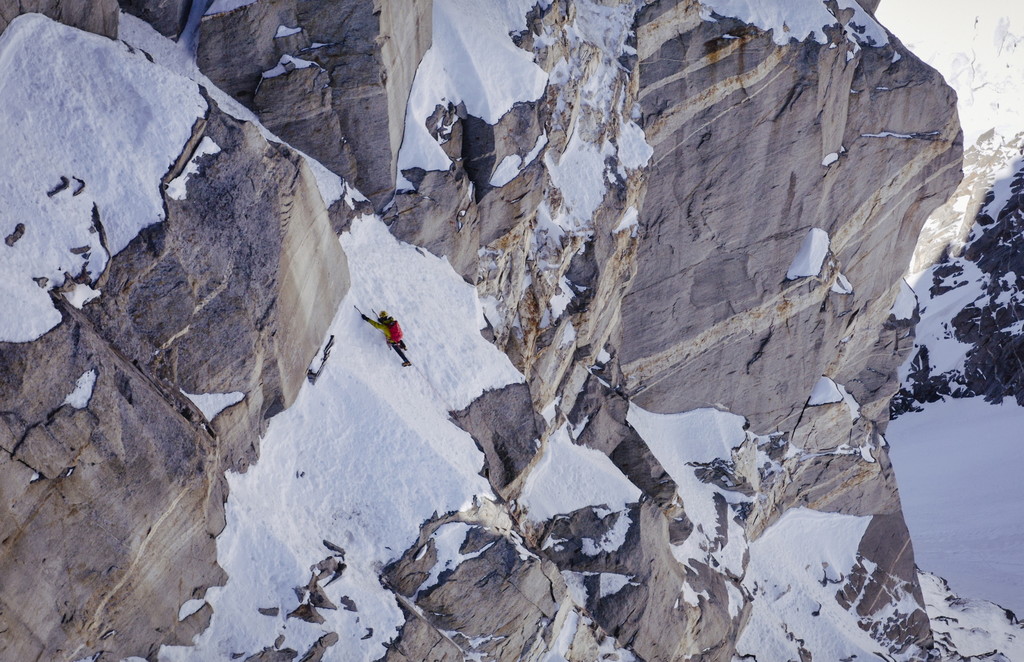
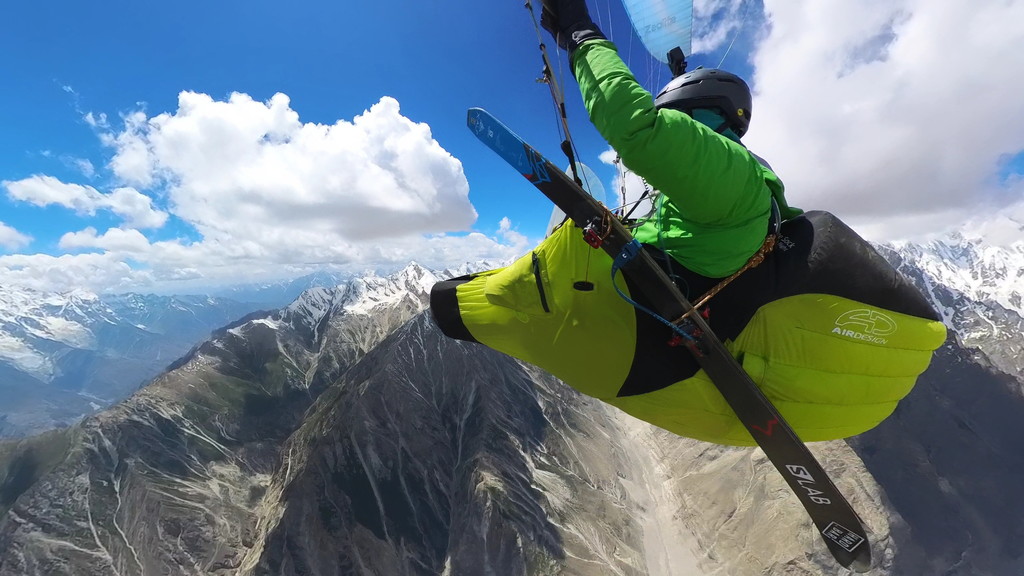
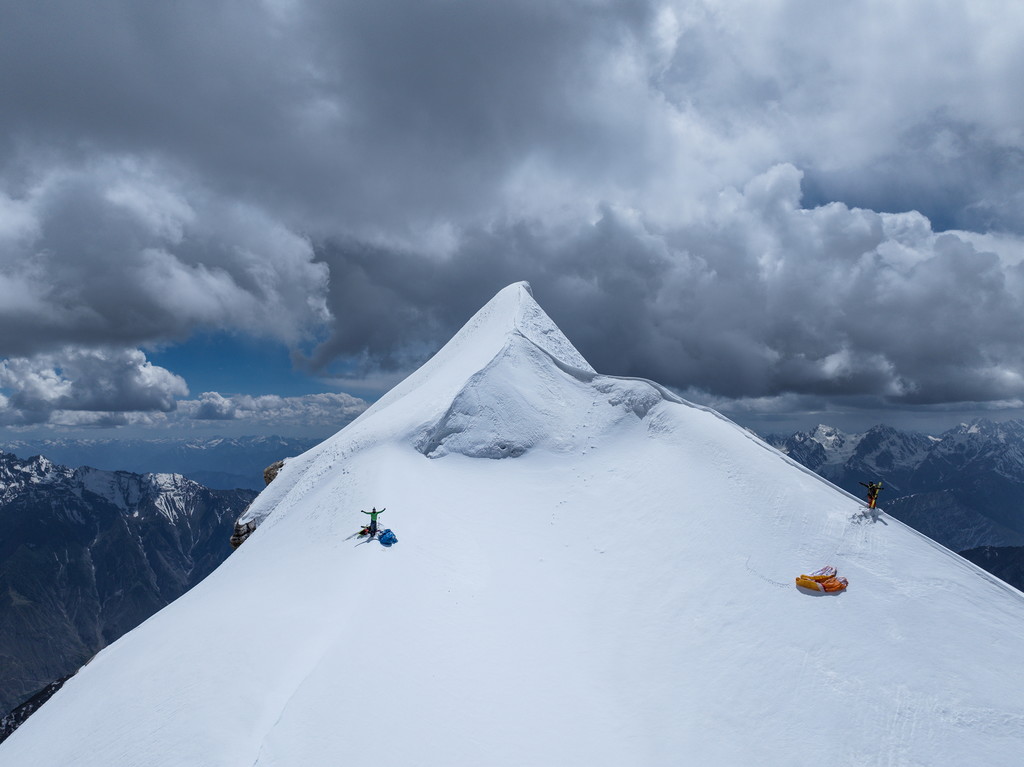
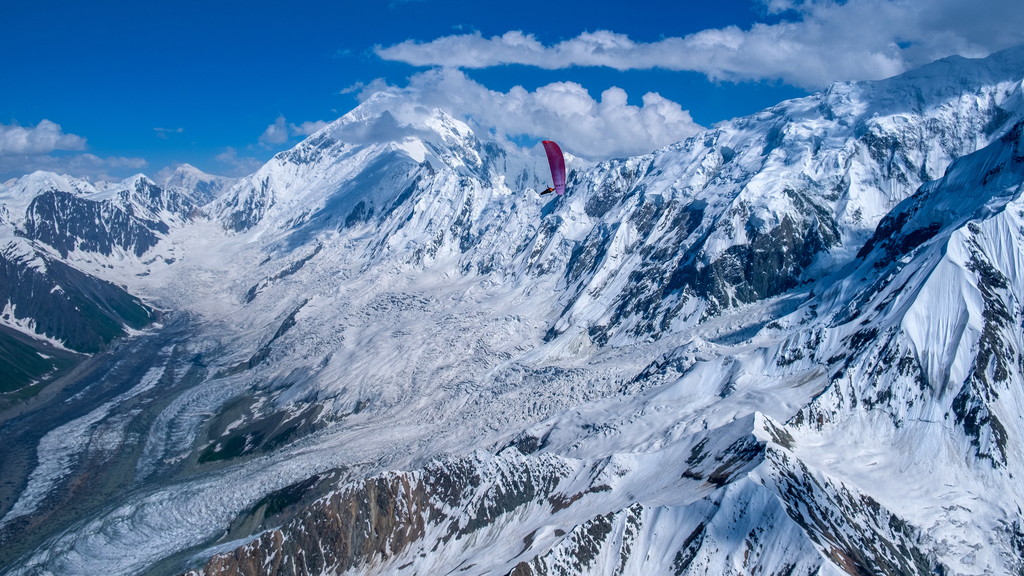
Forty-four years after Jean-Claude and André, on 26 June 2022, paraglider pilots and alpinists Jake Holland, Will Sim, and Fabi Buhl took off on paragliders from the hot, dusty slope above the village of Karimabad in Pakistan (2,900 m). They used rising air to climb to over 6,000 m and flew 20 km along the south side of Ultar Sar. Putting on skis in midair, they landed on the glacier at the base of the Gulmit Tower (5,801 m). At 2 am the following day, Will and Fabi made the first ascent of the 900 m west face. The team flew back to Karimabad later that same day, although Fabi initially struggled to take off in the changing conditions. By flying in, they avoided the four-day, steep, avalanche-prone trek in and out that had hampered previous expeditions. The story is told in Jake Holland’s fantastic movie, A New Way Up.
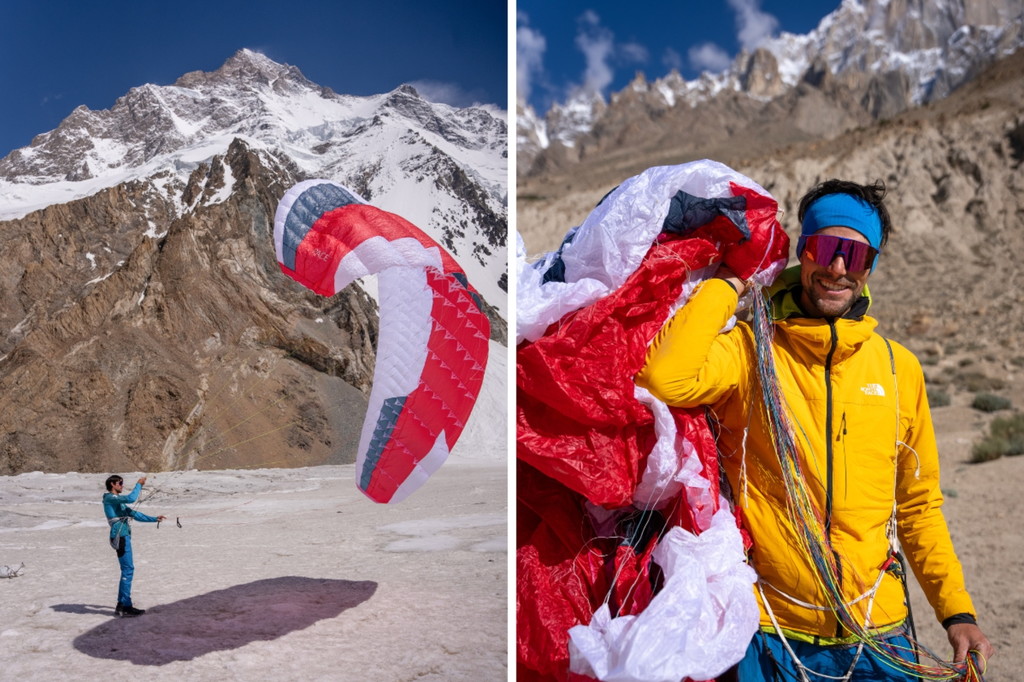
Manufacturers are now releasing ultralight paragliding wings and harnesses specifically designed to support other mountain activities, like climbing or running, including single-surface descent wings weighing less than 1.5 kg. These advances have made paralpinism, a combination of paragliding and other mountain activities (sometimes called “combos” for short), a viable approach for alpine exploration. Athletes are using paragliders to access new lines, as well as routes which have become less accessible as the snowline recedes with climate change (for example, the Pas de Chèvre in Chamonix). This year, mountain guide Benjamin Védrines climbed K2 without supplementary oxygen in just 10 hours 59 minutes and 59 seconds – a new record – then flew down on a specially designed wing weighing just a kilogram. Some athletes, like Benjamin, use paragliders primarily for descent at the end of a route. Others, like Jake, Will and Fabi, use them to ascend, fly cross-country to access the route, and then to return home.
Training and preparation
Paragliding is a highly technical sport, as is alpinism. To combine them, athletes must acquire the necessary portfolio of technical skills, both in the air and on the ground, as well as physical fitness and suitable equipment. Sadly, there have been accidents precipitated by athletes without paragliding backgrounds not taking the time to learn the skills and the meteorology necessary to fly safely in the mountains. Athletes who only fly paragliders for descent in still air are sometimes caught out if they launch early or late, finding themselves in thermic conditions, strong winds or turbulent lee sides. Equally, paraglider pilots can find themselves ill-equipped if they land on a high, crevassed slope. On 26 June 2019, over 150 paraglider pilots took advantage of a high cloud base to land atop Mont Blanc (4,810 m), most without mountaineering equipment. Some struggled to launch again, becoming quickly exhausted due to the altitude. One pilot slid down the face of the mountain to his death. No matter their background, once in the air an athlete is a pilot, and once on the ground they are an alpinist, and therefore must ensure they are sufficiently skilled in both.
Take off and outbound flight
The first hurdle of paragliding is getting airborne. The pilot faces into the wind and lifts the glider above their head. The pilot then walks or runs forwards until the ground falls away beneath them and they take flight, supported by the glider. Strong winds or thermals, steep or uneven ground, or being heavily laden with equipment can make take-off a challenge. In the outbound flight, paralpinists may be flying with skis, climbing gear and camping equipment. The added weight increases airspeed, while lightweight mountaineering harnesses have limited (or absent) back and pelvis protection, compared to regular paragliding harnesses. Collectively, these increase the likelihood and potential severity of injury from a fall, or from being dragged along the ground following a failed take-off.
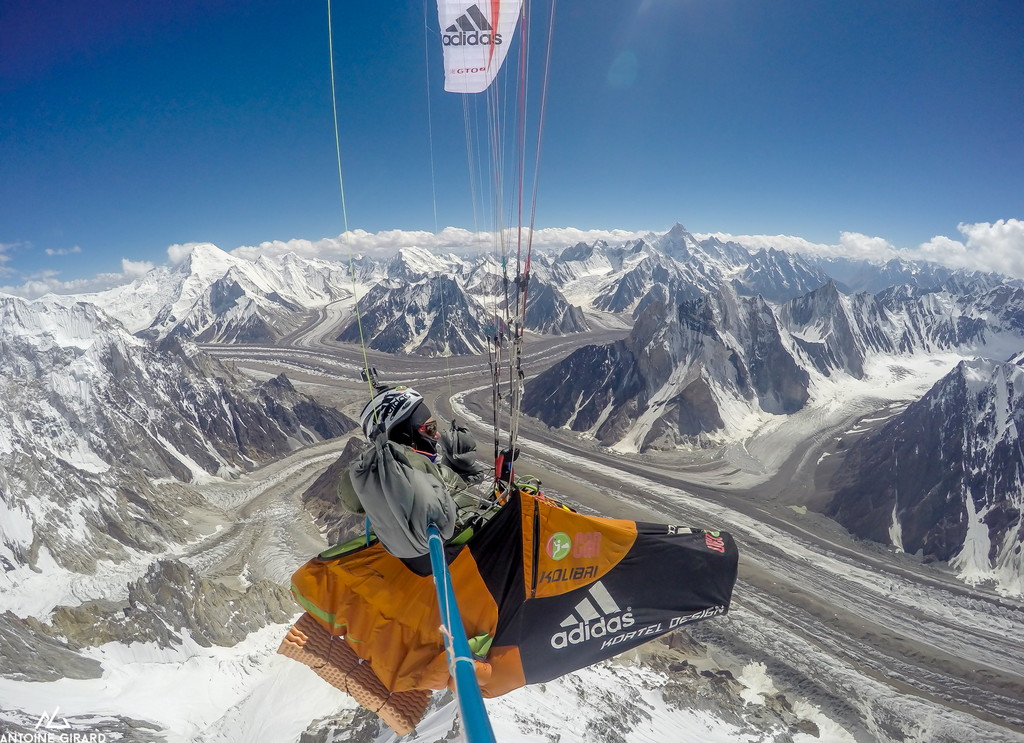
Once airborne, the paralpinist sets course for their objective. Flying paragliders in the high mountains is challenging, navigating strong thermals and equally strong areas of turbulence through complex terrain to the objective. The need to search for lift means success isn’t guaranteed; often a circuitous route is required, and athletes flying together can become separated. Paralpinists have the potential to gain over 5,000 m in altitude in flight, limited only by the height of the clouds and the strength of the winds aloft. In flight they can face hypobaric hypoxia, acceleration (G) forces, wind, cold, and UV radiation. There is even the (theoretical) potential for decompression illness, the bends, though there have been no documented cases.
Landing high
Landing at high altitude is technically demanding. Thermals coalescing at the top of the terrain can make it hard to touch down, with risks of overshooting or falling back into the lee side of the ridge, precipitating a wing collapse close to the ground. It is also possible to tumble on landing, especially if the ground is snowy or uneven. Landing on skis helps dissipate speed and maintain balance, but requires the paralpinist to put their skis on in the air before landing, removing their hands from the controls for several minutes to do so.
Once on the ground, the hazards depend on the planned activities, which are typically climbing or skiing on glaciated terrain. The final consideration is the return flight. If the wind drops to nothing, it can require considerable effort to take off at high altitude, as the wing requires a higher airspeed to generate lift. If the winds are too strong, become katabatic (a strong, cold, backwind) or the mountain becomes covered in cloud, then launching can be impossible. In either case, the paralpinist risks becoming stranded until the weather improves.
Antoine Girard’s ascent of Diran (7,266 m) on 3 July 2023, two years after his ascent of Spantik (7,022 m), typified these risks. Antoine took off at 2,900 m carrying 30 kg of equipment. He flew 23 km, landing at 2.35 pm at 6,750 m on Diran’s West Ridge. He cached gear and reached the summit at around 8 pm, first with skis, then with crampons. Antoine was insufficiently acclimatised to spend the night at the summit and so he descended in the dark to 6,450 m. Fighting exhaustion, he waited out the night in a tent, developing vomiting, mild confusion and loss of coordination, all signs of cerebral oedema. He had acetazolamide and dexamethasone but could not take either due to vomiting. He hoped to fly down at first light, but the winds were too strong at his altitude. A storm was coming, and he needed to get lower to have any hope of taking off. Antoine descended on foot, exhausted and ataxic, through heavily crevassed terrain. A snowbridge gave way beneath him, and he fell 2 m into a crevasse. He was able to self-rescue and continue down to a suitable take-off, launching from 6,150 m at 11:20 am, moments before the storm, and landing safely but exhausted in Karimabad 40 minutes later.
Adventure medicine considerations
Hypobaric hypoxia
In our experience, the relative ease of climbing to extreme altitudes in a paraglider, and the (mis)perception of being relatively unimpaired while in flight, can lead athletes to overestimate their degree of acclimatisation and underestimate the risks of hypoxia, and the challenges of a prolonged period of physical activity at altitude.
As medics, we should help athletes understand the insidious nature of hypoxia, and how symptoms and susceptibility can vary within and between individuals. This includes the potential “hangover effect” of hypoxia once back at lower altitudes. Athletes are often reluctant to use oxygen, as even systems designed for mountaineering are relatively complex, heavy and bulky. This places a premium on an effective acclimatisation strategy. In many ways, paragliding is actually quite enabling for acclimatisation. Repeated flights have the potential to be mildly acclimatising in themselves, as they often add up to several hours in hypobaric hypoxia. However, it is the opportunity to land at progressively higher altitudes, exercise, sleep, and then rapidly return to lower altitudes for further training and recovery that offers more flexibility than traditional alpinism. In effect, paralpinists can both live high and low, while training high and low. Anecdotally, we have found that ‘one night high, two nights low’ appears to balance acclimatisation alongside rest and recovery, optimising performance in paralpinists. Clearly, this strategy is dependent on finding suitable landing sites at progressively higher altitudes. Care should be taken to choose sites where walking down is a possibility if symptoms of altitude illness develop.
Environmental protection
Athletes need to manage both heat and cold. On takeoff, dressed for higher altitudes, athletes will rapidly start to sweat in the heat of a low, sunny takeoff. Once in flight, they will experience falling temperatures and increasing wind chill as they climb higher. Paraglider pilots fly with their hands above their heads, armpits and wrists exposed to the apparent wind and fingers looped around the control handles, so they are particularly vulnerable to cold hands. We need to strike a compromise between preventing cold injury while maintaining sufficient dexterity to control the paraglider and deploy a reserve parachute in an emergency. We have found a down layering system with a wind-impermeable outer shell, an insulated helmet and electrically heated gloves to be most adaptable to conditions. A harness with a leg cocoon effectively shields the lower limbs. A plastic bag, placed between the socks and boots, can prevent sweat soaking into the boots on takeoff and can be removed once landed at high altitude. Ski goggles suitable for bright light and a buff/balaclava offer UV protection. Paraglider pilots tend to produce an excess of dilute urine, likely due to cold, hypoxia, and semi-recumbent positioning in the harness. As in alpinism, we should encourage paralpinists to eat and drink to maintain performance. Nutritional requirements will depend on the planned activities, but in general, we would suggest a diet prominent in complex carbohydrates and hydration with an electrolyte-rich solution, both whilst in the air and on the ground.
Preparation for stranding
As with Fabi and Antoine, we need to make sure that paralpinists are adequately prepared for being unable to fly down. This might be due to adverse weather, terrain, damage to equipment, physical incapacitation or injury. In addition to progressive acclimatisation, it’s worth considering offering education and rescue medication in case of altitude illness (acetazolamide, nifedipine and dexamethasone). Ensure there is sufficient food, water and shelter. If equipment must be divided between several paralpinists, leave the last person to fly home in possession of the stove, shelter and rescue medication in case they become stranded.
Trauma and first aid
We suggest a minimalist first aid kit, suitable for treating bleeding and isolated limb injuries: typically, a trauma bandage, gloves, two flexible aluminium splints (SAM splints), gauze and zinc oxide tape. We have offered selected paralpinists training and access to methoxyflurane as a strong analgesic, given its light weight and ease of administration by non-medical personnel, particularly in facilitating splinting. There may even be an argument for tranexamic acid if an autoinjector becomes readily available.
Casualty evacuation and communication
The range of modern paragliders, alongside the possibilities of stranding, altitude illness and trauma, makes casualty evacuation planning complex. If the paralpinist cannot find lift during the outbound flight stage, they may land anywhere en route. At their objective, they may need to divert to another landing if the conditions are unsuitable. They may land somewhere inaccessible by foot, preventing the paralpinist from descending or a rescue party from reaching them. In many parts of the world, helicopter coverage is inconsistent, and the insurance situation is fluid. While the specifics of a casualty evacuation plan will vary by location, we stress the importance of detailed route discussion, including alternative landing sites, during the planning phase, then multiple channels of communication while underway.
Pilots typically fly with a variometer/GPS instrument to assist with thermal optimisation and navigation. We use Very High Frequency (VHF) radio for conversation in flight, and high-resolution 4G live tracking via mobile phone, backed up by a satellite tracker/messenger to transmit position (for example, Garmin InReach). Then, when the paralpinist is on the ground, a combination of local mobile phone, VHF radio and satellite tracker/messenger. Paraglider pilots often fly near one another, and alongside other soaring aircraft such as sailplanes. Flying paragliders into clouds is a breach of aviation law and risks collision with terrain or other aircraft. However, on occasion, pilots misjudge the strength of lift and can be sucked into clouds. This is highly disorientating. A ball compass can help maintain heading, and FLARM, an automated radio-based collision avoidance system, is being encouraged by aviation authorities to make paragliders electronically conspicuous to other aircraft nearby.
Paralpinism is an attractive new approach for mountain athletes seeking rapid access to new or otherwise inaccessible routes. Its popularity will likely increase as the equipment continues to improve and climate change pushes the snowline ever higher. It also makes for engaging social media content. There is rich potential for research, particularly into optimum acclimatisation and performance strategies, given athletes have the freedom to climb, camp and descend via paraglider. Paralpinism is also endlessly exciting to support from an adventure medicine perspective, combining the challenges of several sports at once, multiple environmental stressors, nuanced human factors and complex logistics.