Squash Falconer / Adventurer
We might dream of a life of full-time adventure, but very few people actually manage to pull it off. From the harness of a paraglider, to the saddle of a motorbike to the whirrings of an elliptical bicycle, the UK’s Squash Falconer is one of those impressive few. We asked her how she made it happen and if she had any tips for budding expedition medics.

Hi Squash – what’s life like as a full time adventurer?
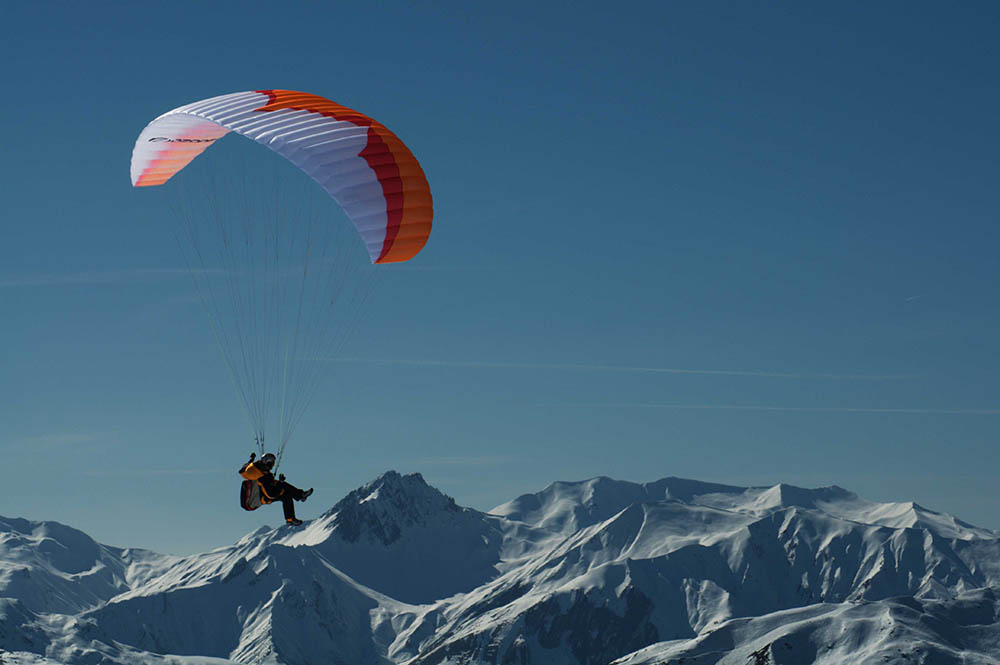
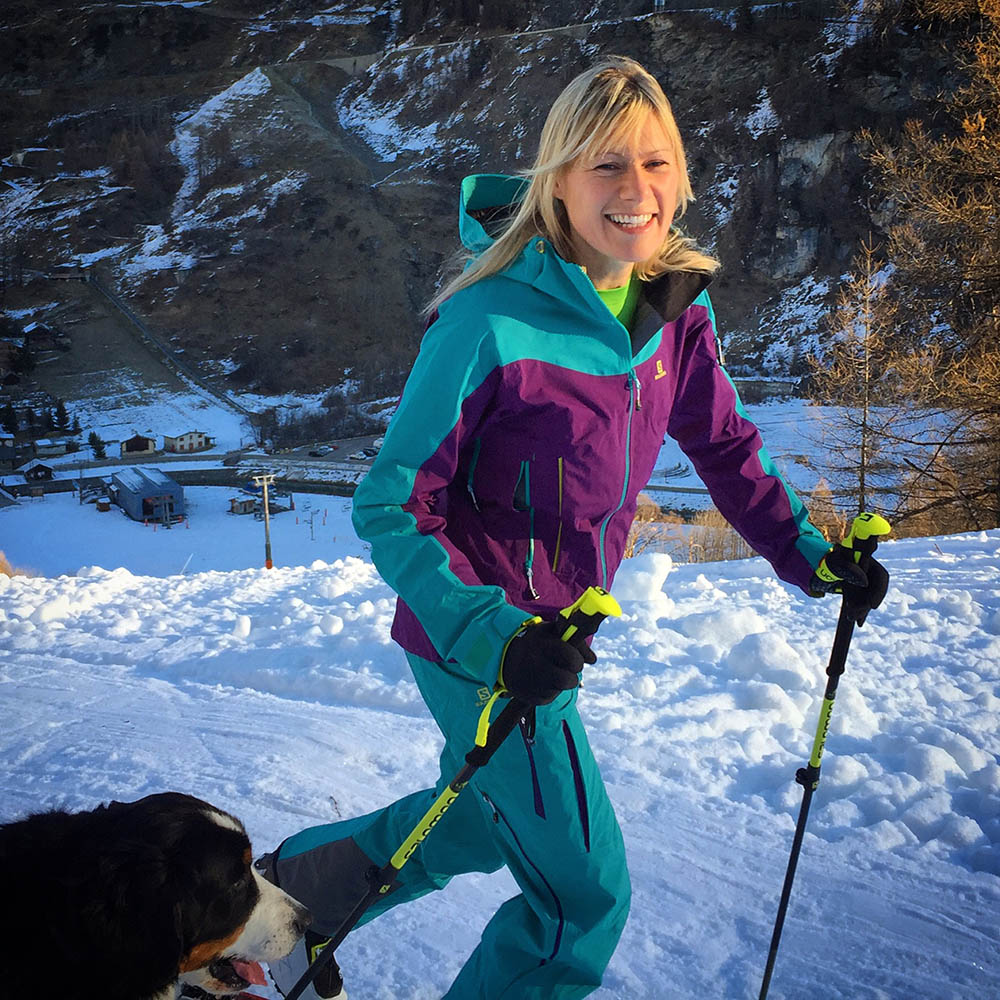
Life is never dull! I work for myself so I have to motivate myself. My days are definitely varied and I travel a lot, which is great, although sometimes it is nice to be in one place for an extended period. Then I can get into a routine and spend quality time with people who I love, recently I’ve had that. In December last year I moved to Tignes in France. My day there typically starts early with a ski tour up the mountain before the lifts open or a training session outside. Then afterwards I have a decent breakfast before getting some work done, unless the snow is too good to resist and I might have to go out skiing for an hour or two.
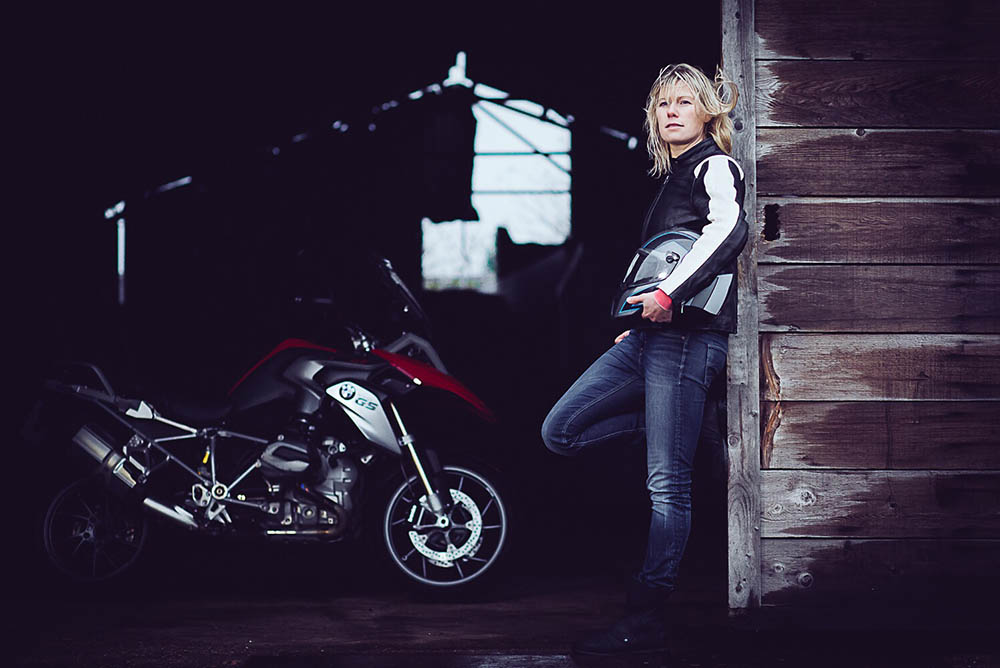
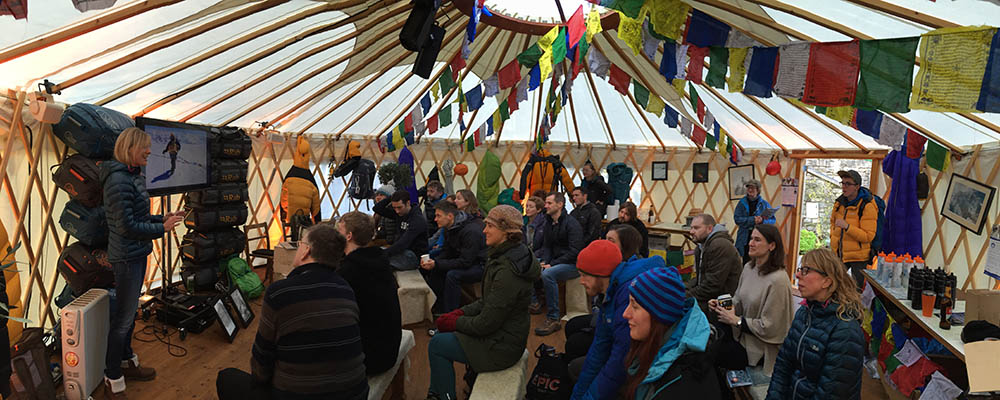
I might be traveling though, like now. Travel is normally work or an adventure or work which is an adventure. Last week I had a few speaking engagements in the UK and today I’m writing this from a studio in Nashville where I’ve been recording voice over for the pilot episode of my TV show, Squash Falconer: Extraordinary. It’s an adventure travel documentary where I ride thousands of miles through South America on my BMW motorbike meeting extreme athletes – typically Red Bull athletes or world champions – doing extraordinary things.
I’ve got a couple of adventures lined up for later this year. One is a ski tour trip that I’m working on making happen, to a very remote place to ski the midnight sun. The other is for later in the year, an expedition to Nepal with two main goals; to reach out to a remote community affected by the earthquake and help with power solutions, and also to climb an unclimbed peak.
Where have been your favourite places to go?
I have a lot of favourites. Often somewhere becomes my favourite as a result of the people and things I do there more than the place itself. If I had to say top three right now though.
France / Tignes and Annecy. The mountains and lakes are stunning, I have friends and family there and I can do all the sports I love.
Cusco, Peru / I went there when I was filming the TV show. It’s got the most amazing energy and feel to it. It’s beautiful, very charming and full of history.
California / San Francisco especially. It’s just so cool! I went there once to do an interview and in three days, I swam in the ocean, paraglided over the beach and ate delicious clam chowder at the pier. I may have also eaten a lot of Ghirardelli’s chocolate.
What kind of skills have you had to develop to make it work?
Living on a shoestring / I really didn’t earn very much money in my 20s and that was fine, but only because I learnt to live very cheaply. I don’t drink or smoke which helped a lot, but what really made the difference was not owning or renting a house. I often lived where I was working (during ski seasons and for event work) and when I did need a base I was lucky enough to have friends and family who had spare rooms for me to stay in.
Networking / Always important and helpful in my line of work. So much of what has happened and what I have done has been about the people I know and the relationships I’ve built over the years.
Self-motivation / A key skill. If I do nothing, nothing happens. I have no boss to tell me what to do and there have been no guidelines to follow.
Teamwork / On adventures or expeditions, teamwork is vital. There are times when it’s not just me and I love being part of a team. I love the saying:
If you want to go fast, go alone, if you want to go far go together.
African Proverb.
Communication, leadership and people skills / These skills come into play in my role as a presenter and a speaker but also on expeditions. When things get more serious, communicating and leading well makes all the difference.
How do you make ends meet?
It took me a while to figure this one out. Some of the work I do is in exchange for kit, accommodation, travel or simply the experience. My main work for income is speaking and presenting. I also do modelling and work on individual projects, which might be an expedition, a campaign or a workshop.
What kind of medical provision do you make for your expeditions?
Usually the trips I do involve paragliding, mountains or motorbikes, all of which require me to go lightweight. Often I take the smallest first aid kit that I can get away with. Depending on where I’m going my kit might include: foil blanket, plasters, bandage, tape, antiseptic cream/wipe, safety pins, water purification tablets and a few painkillers. Of course, the best medical provision is being on a trip that has a medic on it.
Have you ever had any close calls?
Yes! I got stuck while abseiling down a vertical ice wall just below the summit of Cho Oyu, an 8201m peak. I got my crampon stuck in an old climbing rope and ended up upside down, unable to help myself get free and slipping in and out of consciousness. Fortunately, a teammate witnessed my struggle and was able to reach me to help me down. There have also been a few hairy moments on my paraglider but all ending well.
How do you insure yourself against accidents?
I go through an outdoor kit shop called Vieux Campeur in France for my high mountain and paragliding insurance. I have also used Dog Tag insurance. When I’m skiing I make sure I have a Carre Neige.
Any advice for expedition medics or those setting out in the adventure world?
Yes, talk to as many people as possible. Let everyone know your expertise and that you want to be part of an adventure. Expedition medics are a very valuable part of a team. There are also extremely good websites like Explorers Connect that you can sign up to. People know to head there to find a medic and also there are people on there asking for medics.
Just do it! There’s nothing like just getting on with it: go and do some adventures, even if they are small, to get experience. Say yes to opportunities, if you can’t see a way, work out a way. Surround yourself with likeminded people who can help and support you. Adventures and expeditions aren’t as expensive as you think. In fact you can do the most amazing trips with hardly any money. Think of what you would like to do and say it out loud, tell people. It’s amazing what happens when you set your intentions and tell people.
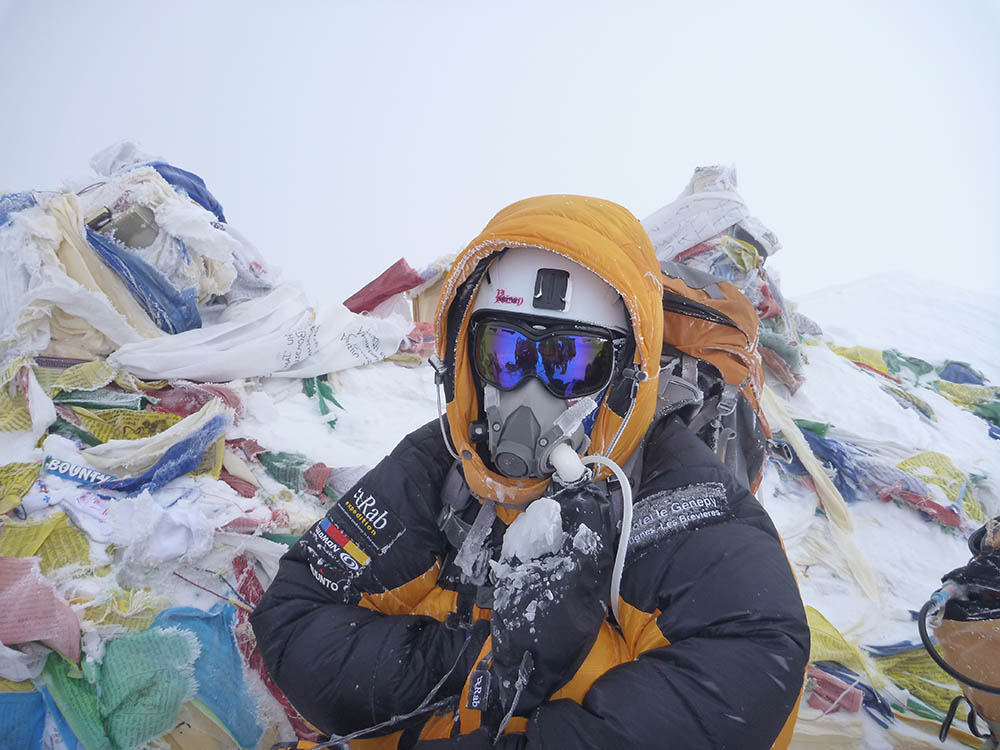
Squash is a record-breaking adventurer, speaker and presenter. She was the first British woman to climb and paraglide from the summit of Mont Blanc having ridden there from the UK on her motorbike. Squash has summited Everest, bum-boarded off Cho Oyu and in 2013 completed a 3000 mile journey on an ElliptiGO setting a new distance record for travel by elliptical bicycle. Get in touch with Squash via her website.