Dr Shireen Kumar / Advanced Trainee Registrar, Australian College of Rural and Remote Medicine / Queensland, Australia
Shireen started her Rural Generalist journey in Australia after completing a Graduate Diploma in Healthcare in Remote and Extreme Environments. Having worked in four Australian states and volunteered her skills overseas, Shireen has been working toward curating a career that mixes travel, adventure and serving rural communities. She hopes to continue working in rural and remote environments in both Australia and internationally while developing local training pathways to encourage doctors to train and work rurally.
What is a Rural Generalist?
Rural Generalists are specialist medical practitioners with a diverse clinical skillset trained to provide safe and holistic care in lower-resourced environments and smaller communities. They are competent practicing in community and hospital settings managing a wide range of acute and chronic conditions from birth to death. Rural generalists are trained in General Practice, with added clinical skills in Emergency Medicine, Obstetrics, Anaesthetics, Paediatrics and most subspecialities due to the diverse nature of the presentations they see. For this reason, they have a skillset that can be adapted to most remote, austere and international clinical environments.
About Medical Santo
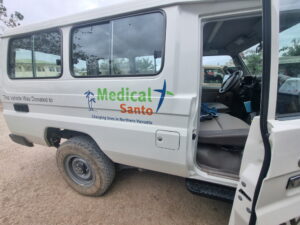
Medical Santo is based in the town of Luganville on the island of Espiritu Santo (Santo) in northern Vanuatu. It was founded in 2012 as a not-for-profit, Christian-based charitable organisation with the aim of working with local health services to provide Primary Health Services, mobile outreach clinics, education and mentoring in Northern Vanuatu. Volunteers occasionally support the Northern Provincial Hospital as well.
What does that mean in practice? They run a GP-style clinic in Luganville, coordinate visiting volunteers (doctors, nurses, midwives, allied health) to support the local healthcare services, and provide outreach to rural/outer island communities.
Daily life
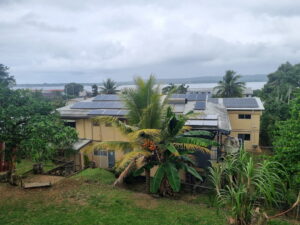
Living in Luganville is a blend of island-paradise and practical clinic-town. The town of approximately ~18,000 people features a mix of locals, expats and tourists.
Accommodation
There are bedrooms, bathrooms, living areas and a kitchen above the clinic, with a spare 2-bedroom house located behind the clinic. Linens and towels are provided, along with all utensils, crockery and appliances.
Technology
Wifi is available in the clinic and the accommodation located behind it. Volunteers are advised to purchase a local SIM card for personal data use.
Food
You will need to pay for your own groceries and multiple stores are a short walk away in town.
Climate
Tropical and warm with ‘wet’ and ‘dry’ seasons. Be prepared for occasional heavy rain and tropical conditions.
Culture
A diverse blend of Melanesian and Polynesian customs. Bislama is the national language, with English and French widely spoken. Christianity is the predominant religion.
Transport & flights
Direct flights operate to Santo from Australia (3hr flight from Brisbane). Alternatively, volunteers can travel via Port Vila, the capital (1hr domestic flight).
Paperwork
Visas and in-country medical registration are organized by the administrative team on your behalf, thought small fees apply (see below). Volunteers need to organise their own indemnity.
Preparation
Volunteers receive a comprehensive Volunteer Handbook and the Vanuatu Clinical Guidelines, both designed to support a smooth transition into living and practicing clinically on the island.
Costs
Volunteers pay $500 AUD to the organisation, which covers the costs of obtaining a visa, medical registration and accommodation. Flights to/from Vanuatu are paid for by the volunteer.
Indemnity
Check with existing medical indemnity organisation if international volunteer work is covered – usually it is if it’s within the volunteer’s normal scope of practice.
Arrival
On arrival to Luganville, volunteers are greeted by Medical Santo staff at the airport and given a tour of the town. The tour includes the shops, markets, parks and restaurants, and where money can be exchanged or local currency withdrawn. Volunteers will be taken to the clinic, which is located behind one of the local police stations, and shown to their room and given an orientation of how the clinic runs. A Bislama cheat sheet with common medical and social phrases is provided.
Clinic Details
Medical Santo runs a GP clinic Monday to Friday, 8am-5pm. The last patients are booked in at 430pm – unless there is an emergency. Some patients book appointments in advance, but most are walk-ins. If there are too many walk-ins one day, they are triaged by the reception staff and asked to return the following day.
The practice is run by a highly competent Australian-trained nurse practitioner who has worked in the country for years. The remainder of clinic staff (practice manager, receptionists, wound care nurse and housekeeping) are locals who have been trained, upskilled and supported by Medical Santo volunteers over the years.
The clinic provides services at a cost, so as not to undermine the local health services. There is no free healthcare in Vanuatu, including at public hospitals. There is also a cultural perception that free services are valued less, so all fees go back into overhead costs, supplies and supporting the local Ni-Vanuatu (Ni-Van) staff.
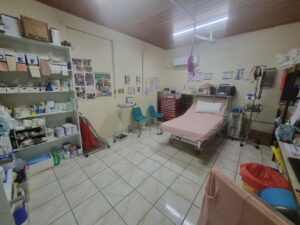
There are clinic rooms with beds, computers, desks and folders with educational materials in Bislama for locals. Best Practice is the clinical software used for patient notes. There is an on-call roster split between other volunteers and the nurse practitioner with an on call phone for locals to call through requesting advice – this is not a burdensome on-call, and most often patients can be seen during clinic hours or referred to the hospital for after-hours care if necessary. The clinic as its own dispensary and procedure room.
Local Resources
Equipment available in clinic:
- Pulse oximeters
- BP machines
- Stethoscopes
- Blood sugar monitors
- Urinalysis strips
- iSTAT test cartridges for HbA1c, biochemistry, troponin
- Cannulation, venepuncture and histopathology equipment
- ECG machines
- Oxygen cannisters
- Nebulizers
- Ultrasound machine with curved and linear probes
- Wound care and procedure room with varied dressing types and small procedure sterile equipment including diathermy pens
- Emergency drugs
- Local anaesthesia
- Select oral medications for various acute and chronic conditions
- PO/IV antibiotics and fluids
- Equipment sterilizer
The Northern Provincial Hospital is located a short walk away from the clinic. Patients who are acutely unwell can be sent to their Emergency Department with a letter specifying further management. Basic x-rays and ultrasound and some formal serological tests are also offered, and outpatient clinics and midwifery services are provided through the hospital as well. There is one CT scanner in the country located in Port Vila that is available at significant cost to the patient.
There are minimal specialist services in the country, but volunteers are encouraged to contact use their available contacts and liaise with colleagues and friends overseas for advice as required. Volunteers are often working without subspecialty backup, pathology/imaging or tertiary-hospital support. Limited resources means clinical judgement, pragmatic decision-making, creativity and communication matter. The focus is on access, capacity-building, education and doing the best with what is available.
Common Illnesses & Presentations
The clinic encounters a mix of chronic and infectious diseases. Chronic disease management is usually intermittent due to sporadic follow up, as patients often travel from surrounding islands or remote communities. A pragmatic approach to chronic disease management is required in this sense, and investigations come at additional patient cost, so need to be heavily rationalized on whether they will change management. Infectious disease management is based on local guidelines and knowledge of diseases that are endemic to the region.
Non-communicable diseases (NCDs)
- Hypertension (HTN) and its sequelae — cardiovascular risk, stroke, renal disease
- Type 2 Diabetes — screening, management, complications
- Gastro-oesophageal reflux disease (GORD) / dyspepsia — commonly diet related
- Asthma – acute management and patient education often needed
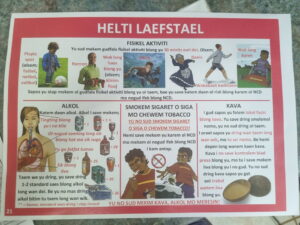
Remember that lifestyle, diet, and cultural views on health & medicine matter, but need to be addressed in a culturally sensitive way. Education and advice need to account for what is practical on the island, and misinformation needs to be addressed kindly and respectfully. Patient handouts are available and a useful educational tool. Literacy is variable in rural communities, but often patients had family members who could translate information for them at home.
Infectious/acute presentations
- Cellulitis – be aware of prevalent antimicrobial resistance due to wide availability of OTC antibiotics
- Upper/Lower Respiratory Tract Infections
- Leptospirosis
- Chancroid
- Tuberculosis
- Scabies
- Ciguatera
- Yaws
- Sexually Transmitted Infections and Pelvic Inflammatory Disease
Occasionally there are acute presentations such as unstable angina, non-infective exacerbations of asthma and sepsis that present to the practice both in- and out- of hours. These presentations are often managed in the practice as there is appropriate resources to do so. Rural Generalists who have worked in both community and hospital practice will feel comfortable managing these conditions independently in the practice and providing ongoing monitoring, reviews and supervision for as long as needed. Local staff were also highly skilled and trained to assist in these emergencies. A surgical background is also beneficial, as patients requiring procedural excisions of soft tissue biopsies have few options aside from being managed in the clinic. Any histopathology samples needed to be shipped to Australia for testing, and patients also needed to pay for these privately.
Case Studies
Case 1
A woman in her 40’s presented with a complaint of increased swelling in her neck, difficulty swallowing and shortness of breath. On examination, she had a large palpable mass in her anterior neck that was determined to be a multinodular goiter and the main cause for her symptoms. She also had decreased air entry in her right lung. There is no ENT surgery available in Vanuatu, so upon discussion with the patient regarding her options, she opted to pay for TFT’s (which would be sent to Port Vila to be tested) and obtain a chest x-ray at the local hospital. She was educated about the importance of consuming iodised salt, which is readily available on the island and followed up the next fortnight for her results. She was found to be hypothyroid and had a right sided pneumonia, so was given thyroxine supplementation and antibiotic therapy as her ongoing management. She did not have the resources to travel internationally for definitive management, so was made aware of red flags and when she needed to seek medical attention for comfort cares if her symptoms worsened beyond what was treatable on Santo.
Case 2
A young man in his 20’s presented with coryzal symptoms, fevers, myalgias and abdominal pain for 4 days. He worked locally as a high school teacher and was otherwise fit and well. He was accompanied by his wife, who did not have similar symptoms. On examination, he had a low grade fever and scleral icterus, was diaphoretic and had mild upper abdominal tenderness. History was suggestive of exposure to contaminated water sources and he was given doxycycline to treat presumed leptospirosis. He was also given a form for leptospirosis PCR and an ultrasound of the abdomen to rule out alternative diagnoses, which he was happy to pay for. He returned later that week with results confirming acute leptospirosis infection and improving symptoms following doxycycline administration.
These two cases highlight the importance of clinical reasoning, adaptability and patient-centred decision-making in resource-limited settings. Without immediate access to investigations or specialist support, health care providers must rely on thorough history taking, examination and pragmatic judgement to guide management. While both patients were fortunately able to self-fund investigations, this is not always possible, and treatment decisions may need to be made presumptively based on the most likely and most serious potential diagnosis. This must be balanced with the risks of over- or under-treatment and uncertain follow up, while considering cultural, financial and logistical barriers to care.
Recreational time
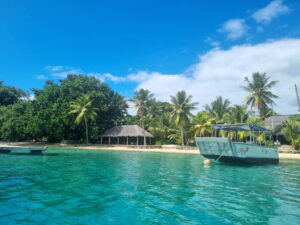
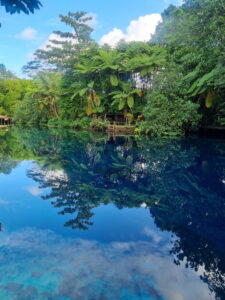
Volunteers are encouraged to make the most of their time off on the island. There are areas to snorkel and swim, with numerous beaches, blue holes and lagoons to explore on weekends. Tours around Santo are offered by various local companies and there are local boats that travel to surrounding islands for hiking, canyoning or scuba diving adventures. Medical Santo themselves encourage volunteers to have a balanced lifestyle to fully explore Santo and surrounding islands, and the roster accommodates for this. There are also numerous public holidays throughout the year with accompanying festivities.
How can volunteers prepare for their time with Medical Santo?
Primary care and rural and remote experience and training are highly valuable, though this is not a prerequisite for the role. Knowledge in tropical disease management is helpful, as well as familiarizing yourself with the cultural nuances of Vanuatu. Prior completion of the WEM Humanitarian Medicine course provides good clinical and lifestyle tips for working in international contexts.
Is volunteering with Medical Santo recommended?
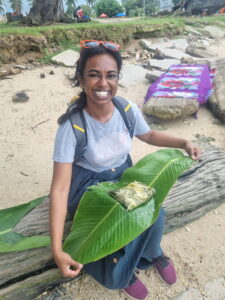
Yes, absolutely! This is a volunteering opportunity that offers meaningful clinical impact with professional development and a genuine adventure in a beautiful South Pacific.
Administrative and recruitment staff are responsive and organized, and so is the setup on the ground. Medical Santo has a credible track record, structured volunteering roles, ties with the Vanuatu Ministry of Health, and clearly stated goals of sustainability and partnership that are obvious in daily operations.
It is a valuable and fulfilling opportunity professionally and personally and many volunteers return due to their positive experiences.
How to get involved
Medical Santo welcomes doctors, nurses, midwives, dentists, allied health, paramedical professionals, medical educators and medical students on electives as well. Interested individuals can contact the administrative team via their email displayed on the organisation website to discuss suitable roles and coordinate volunteer visits with roster gaps. Rolling recruitment allows the organisation to plan volunteer trips well in advance. Experience in resource-limited environments and primary healthcare provision is valuable, and checking with medical indemnity providers for overseas coverage is necessary. Alternatively, volunteers can contact Pacific Islands Health and Education Limited via the email listed on their website for other opportunities in the Pacific Islands. Organisation staff are supportive and happy to answer any questions volunteers may have.
Can readers help without volunteering?
Yes! Click here to donate to Medical Santo to help fund clinic supplies.
Points to keep in mind
- Be ready for rural work: limited resources require rationalization before use.
- Embrace adventure: connect with the local volunteer team and take downtime to explore and appreciate the environment.
- Cultural sensitivity is key: listen, respect local customs and work in partnership. The volunteer role is about being as much a learner as a teacher.
- Logistics such as flights, accommodation and supplies can sometimes be less predictable in a remote setting. Be flexible.
More information can be found about Medical Santo by clicking here.